

A custom medical analysis is a user-configured report module inside a record-review platform that pulls specific, page-cited findings out of a medical record and organizes them around your workflow, not a generic summary format. Instead of reading a flat narrative, you get a timeline of treatment, a permanent-and-stationary (P&S) or maximum medical improvement (MMI) tracker, apportionment notes, or a specialty section built for psychiatric or orthopedic claims, each one tied to the exact page it came from.
The value shows up in two places: traceability and focus. Every fact in a properly built custom analysis carries a citation back to its source page, so a QME, AME, or attorney can check the summary the same way they'd check a direct quote from the chart. And because the extraction is automated, the reviewer's time goes to reading and judging the record rather than to page-flipping across a 2,000-page file to find the relevant entries.
Common modules requesters ask for include:
- Chronology/timeline: a chronological list of treatment events, visits, and diagnostic findings
- P&S/MMI tracker: the documented exam findings and physician statements that an evaluator will consider when rating, tied to specific exam dates
- Apportionment notes: pre-existing condition references and causation language quoted from treating notes, for the evaluating physician to weigh
- Medication and vitals tables: normalized drug regimens and vitals trends across providers
- Specialty sections: psychiatric symptom timelines, orthopedic range-of-motion trends, and similar targeted extractions
Key Takeaways
A custom medical analysis works because it pairs a configurable module (timeline, P&S/MMI tracker, apportionment notes) with a live, page-level citation, so focus and traceability come from the same feature rather than trading off against each other.
| Point | Details |
|---|---|
| Definition | A custom medical analysis is a user-configured module returning page-cited findings tailored to your legal question. |
| Request with specifics | Name the legal question, module list, citation convention, and export format before commissioning work. |
| Verify before relying | Spot-check citations, confirm chronology accuracy, and flag missing pages before using output in a report. |
| Timeline scales with volume | Record volume, module complexity, and the depth of the QC pass drive how long a custom analysis takes. |
| ChartInsight™'s approach | Templated, page-cited custom analysis sections with an integrated PDF viewer and citation-preserving DOCX/PDF export. |
Table of Contents
- What Does a Custom Medical Analysis Actually Contain?
- How Does a Custom Analysis Fit Into a Defensible Review Workflow?
- Who Actually Commissions a Custom Analysis, and When?
- How Do You Specify a Custom Medical Analysis Request?
- What Do the Delivered Files Actually Look Like?
- Where Do Custom Analyses Fall Short, and How Do You Guard Against It?
- How Long Does It Take, and What Drives the Cost?
- How Does ChartInsight™ Handle Custom Medical Analyses?
- A Practitioner's Take on Trusting Automated Analyses
- See a Custom Medical Analysis Built From a Real Record
- Sources
- FAQ
What Does a Custom Medical Analysis Actually Contain?
Most custom analyses are built from a handful of recurring module types, and knowing what each one does helps you specify exactly what you need instead of accepting a generic package.
The timeline or chronology module lists treatment events in date order, pulled from progress notes, diagnostic imaging reports, and specialist consults scattered across a multi-provider file. The P&S/MMI tracker isolates the exam findings, range-of-motion measurements, and physician statements that feed into an impairment rating, each one linked to the page where the treating or evaluating physician wrote it. The apportionment module does something trickier: it surfaces references to prior injuries, pre-existing conditions, and competing causes of disability, then cites the treating notes where those references appear.
- Timelines and chronologies (event-by-event, page-cited)
- P&S/MMI trackers (rating inputs tied to exam dates)
- Apportionment notes (prior conditions and causal language)
- Medication tables and normalized vitals (BP, pain scores, BMI trends)
- Specialty sections for psychiatric or orthopedic claims
- A document list showing every source file included in the review
The strongest custom analyses map directly to the legal question in front of you. A causation dispute calls for a timeline module that highlights gaps in care and pre-injury symptom mentions. An apportionment fight calls for a module that surfaces every reference to a prior condition, cited to the exact treating note. Build the module around the question, not the other way around.
California practice points the same way: the DWC's FAQ for QMEs explains that the medical and non-medical records sent to an evaluator supply the treatment history, prior records, and test results the evaluation relies on. A well-built module set organizes exactly that material, page by page, for the evaluator to read.
How Does a Custom Analysis Fit Into a Defensible Review Workflow?
A custom analysis works as a templated, citable layer that sits on top of the raw record and links every extracted claim back to its source page. It isn't a replacement for reading the chart. It's a faster, cited path through it.
The operational flow generally runs in five steps:
- Intake and ingestion: the full record, often a single stitched PDF from multiple providers, loads into the platform.
- Classification and deduplication: documents get sorted by type (progress notes, imaging, billing) and duplicate pages get flagged.
- Module configuration: a clinical reviewer or paralegal selects a template or builds a custom module set matching the case's legal questions.
- Automated extraction: the platform pulls relevant facts and attaches a live page citation to each one.
- Reviewer QC and export: a QME, attorney, or clinical reviewer checks the output against the source, then exports a final file.
In practice, the paralegal usually handles intake and record assembly, the clinical reviewer configures the modules and runs a first-pass check, and the QME, AME, or attorney does the final sign-off before the analysis goes into a report or gets shared with opposing counsel. This division of labor mirrors what specialty record-review services already do to cut delays; one industry columnist's analysis of clinical documentation retrieval argues that condensed summaries help identify key information and support faster decisions on complex files.
Pro Tip: Require an audit trail and live PDF viewer links as a non-negotiable part of the spec. If a vendor can't show you which staff member touched which document and when, you have no way to defend the summary if opposing counsel challenges it in deposition.
Who Actually Commissions a Custom Analysis, and When?
The primary users are QME and IME physicians, workers' comp attorneys and adjusters, personal-injury attorneys, paralegals, clinical reviewers, and psychiatric reviewers handling stress or psych claims. Each group tends to reach for a different module first.
- QME/AME physicians preparing a Med-Legal report often lean on the P&S/MMI tracker to organize rating inputs before drafting impairment conclusions.
- Workers' comp attorneys building an apportionment argument need the apportionment module's citations to pre-existing conditions front and center.
- Personal-injury attorneys evaluating a settlement lean on the full chronology to spot gaps in care or pre-existing complaints that affect damages.
- Psychiatric reviewers handling stress claims need a symptom timeline module that tracks mood, sleep, and treatment compliance across dozens of therapy notes.
- Paralegals and clinical reviewers typically configure the modules and run the first QC pass before a physician or attorney signs off.
Thorough record review can also have a financial payoff. A workers' comp cost-management blog argues that medical record review that surfaces duplicate billing, missing treatment plans, and gaps in care helps reduce excessive costs and move claims toward settlement, which is one more reason to configure the right module before, not after, negotiations start.
How Do You Specify a Custom Medical Analysis Request?
State the legal questions and deliverable format up front. A vague request produces a generic summary; a specific one produces something you can actually rely on in a deposition or a Med-Legal report.
A workable request typically covers:
- Scope: which records, date ranges, or providers to include (and exclude).
- Module list: timeline, P&S/MMI tracker, apportionment notes, medication table, or specialty sections.
- Citation convention: page-level citations only, no paraphrased claims without a page reference.
- Output format: editable DOCX or PDF with citations preserved on export.
- Delivery timeline: a firm date consistent with filing deadlines.
- QC requirements: who verifies citations, and what the audit trail looks like.
Sample language you can adapt for an internal request or vendor ticket: "Provide a chronology of care with page citations for all events relevant to causation and gaps in treatment. Include P&S/MMI rating inputs and apportionment notes citing pre-existing conditions referenced in treating notes. Deliver as editable DOCX with citations preserved, ready for QC by [date]." Organizing the underlying file before you even reach this step matters too, and structured approaches to medical record organization in PI claims can shorten how long the configuration step takes.
Pro Tip: Ask for a one-case proof-of-concept before committing to bulk delivery. A single sample lets you confirm the citation format and module quality without betting an entire caseload on an untested spec.
What Do the Delivered Files Actually Look Like?
Delivered outputs are editable DOCX or PDF files that keep live page citations intact, so clicking a citation in the exported file takes you back to the exact page in the original PDF. That's the detail that separates a defensible custom analysis from a static summary someone typed by hand.
| Export Component | What It Contains |
|---|---|
| Summary section | Narrative or module-based findings organized by topic |
| Module outputs | Timeline, P&S/MMI tracker, apportionment notes, or specialty sections |
| Supporting pages appendix | Referenced source pages compiled for quick lookup |
| Citation anchors | Live links connecting each fact to its exact source page |
- Citation anchors should remain functional after export, not just as static text references.
- The original record itself should never be altered, edited, or rewritten during extraction.
- A duplicate or paraphrased claim without a page anchor is a defect, not a stylistic choice.
The evaluator's obligations reinforce why this matters: a QME's conclusions have to rest on the records actually reviewed, which means an export that can't be traced back to a page is a liability, not a convenience.
Where Do Custom Analyses Fall Short, and How Do You Guard Against It?
Custom analyses take a lot of page-flipping out of review, but they aren't infallible, and treating them as a replacement for reviewer judgment is the most damaging mistake a practitioner can make. Verification, scope control, and a documented QC pass remain essential every time.
Run through this checklist before relying on any exported analysis:
- Spot-check a sample of citations against the original PDF pages.
- Confirm the chronology matches the record in date order, with no dropped events.
- Verify specialty section outputs (psychiatric symptom timelines, orthopedic ROM trends) align with clinical expectations.
- Check for omitted records, duplicate entries, or documents outside the specified scope.
Watch for these red flags:
- Missing source pages on any extracted claim.
- Paraphrased statements with no citation at all.
- Clinical conclusions that read as templated boilerplate rather than case-specific findings.
A citation without a verifiable page reference is not a citation. It's an assertion dressed up to look like one, and it will not survive cross-examination.
Pro Tip: Attach a short, dated QC note to every exported file stating who verified the citations and when. It takes thirty seconds and gives you a paper trail if the analysis is ever challenged. For a deeper look at where automated extraction can misfire, this practitioner-focused breakdown of AI limitations in legal and medical review is worth reading before you rely on any platform for a filing deadline.
How Long Does It Take, and What Drives the Cost?
Turnaround depends on the record volume, the complexity of the modules you request, and how deep a QC pass you run before the output goes into a report. Ask any vendor or platform for its own figures on your record sizes rather than relying on generic ranges.
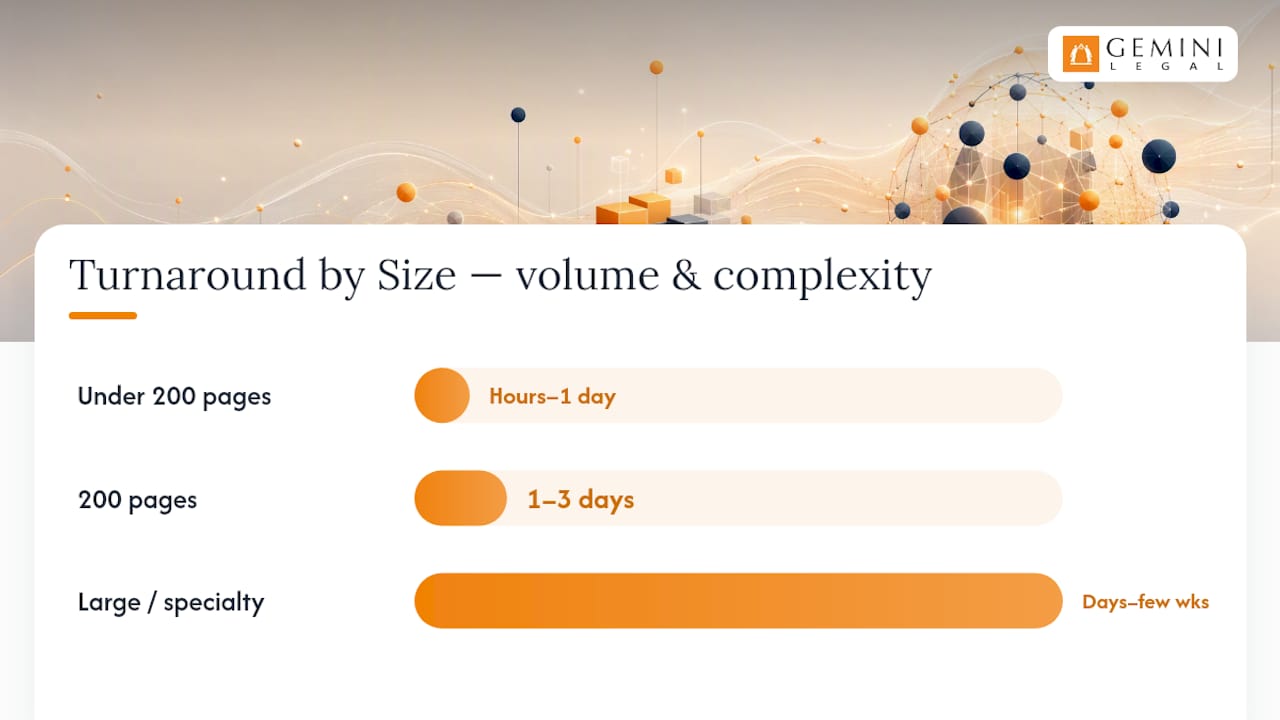
Cost and timeline both move with:
- Record volume: a 3,000-page multi-provider file takes longer than a 150-page single-provider chart.
- Specialty sections required: psychiatric symptom tracking or orthopedic ROM analysis adds configuration time.
- Manual QC depth: a full page-by-page verification pass costs more time than a spot-check.
- Expedited delivery: rush turnaround for an imminent filing deadline typically carries a premium.
RAND's 2026 study of Qualified Medical Evaluators and the medical-legal process in California examined, among other questions, how delivery of medical records to QMEs could be improved, a reminder that getting the file to the reviewer is itself part of the timeline. If you're working against a QME or IME filing deadline, build in enough runway after delivery for a real QC pass rather than treating the export as the final word.
How Does ChartInsight™ Handle Custom Medical Analyses?
ChartInsight™ generates chronologies, narrative summaries, normalized vitals, and medication tables as standard outputs, and lets teams add custom analysis sections such as a P&S/MMI tracker, apportionment notes, or a specialty symptom timeline, inside a platform with an integrated PDF viewer, so clicking any citation opens the exact source page without leaving the app.
The feature set that supports this includes:
- Templates and a Prompt Library for consistent output across a med-legal report or a peer review, every time.
- Document classification so intake files get sorted automatically, with staff roles controlling who can access which matter.
- Editable DOCX/PDF export that preserves citation anchors rather than stripping them out at delivery.
- A research assistant that answers case-specific questions with a cited pointer back to the source page.
A firm working a multi-provider workers' comp file can configure a timeline and an apportionment section, review the citation-backed output against the source pages, and move to drafting with every fact already pointing at its page. ChartInsight™'s workers' comp record review workflow and its personal-injury review tools both apply the same design principle across their respective specialties.
The original medical record is never altered. Every fact in a custom analysis exposes the exact page it came from, which means the reviewer's judgment stays in the loop instead of getting replaced by it.
A Practitioner's Take on Trusting Automated Analyses
Prioritize traceability over convenience every time you commission a custom analysis. A summary that reads cleanly but can't be traced back to a specific page is worse than no summary at all, because it creates false confidence right before a deposition or a Med-Legal hearing.
If you're skeptical of a new vendor or platform, don't accept bulk delivery on faith. Ask for a single-case sample first, and check whether the citation format actually opens the source PDF at the right page, not just a document-level reference. That one test tells you more about a platform's reliability than any sales conversation will.
Fully automated output works well for structured extraction, chronologies, vitals, medication tables, straightforward P&S/MMI inputs. It works less well for genuinely disputed causation questions involving multiple specialties, where a human reviewer's judgment about which competing diagnosis controls still has to drive the analysis. Use the automation to clear the underbrush fast, then spend your review time on the judgment calls that actually decide the case.
See a Custom Medical Analysis Built From a Real Record
ChartInsight™ replaces the manual version of everything described above: a citation-backed timeline, medication and vitals tables, and the custom analysis sections you configure, such as a P&S/MMI tracker or apportionment notes, generated from your record set with every fact linked to its exact source page. Instead of a paralegal cross-referencing a 2,000-page file by hand, the reviewer works from cited output with an integrated PDF viewer that opens the source page the moment you click a citation.
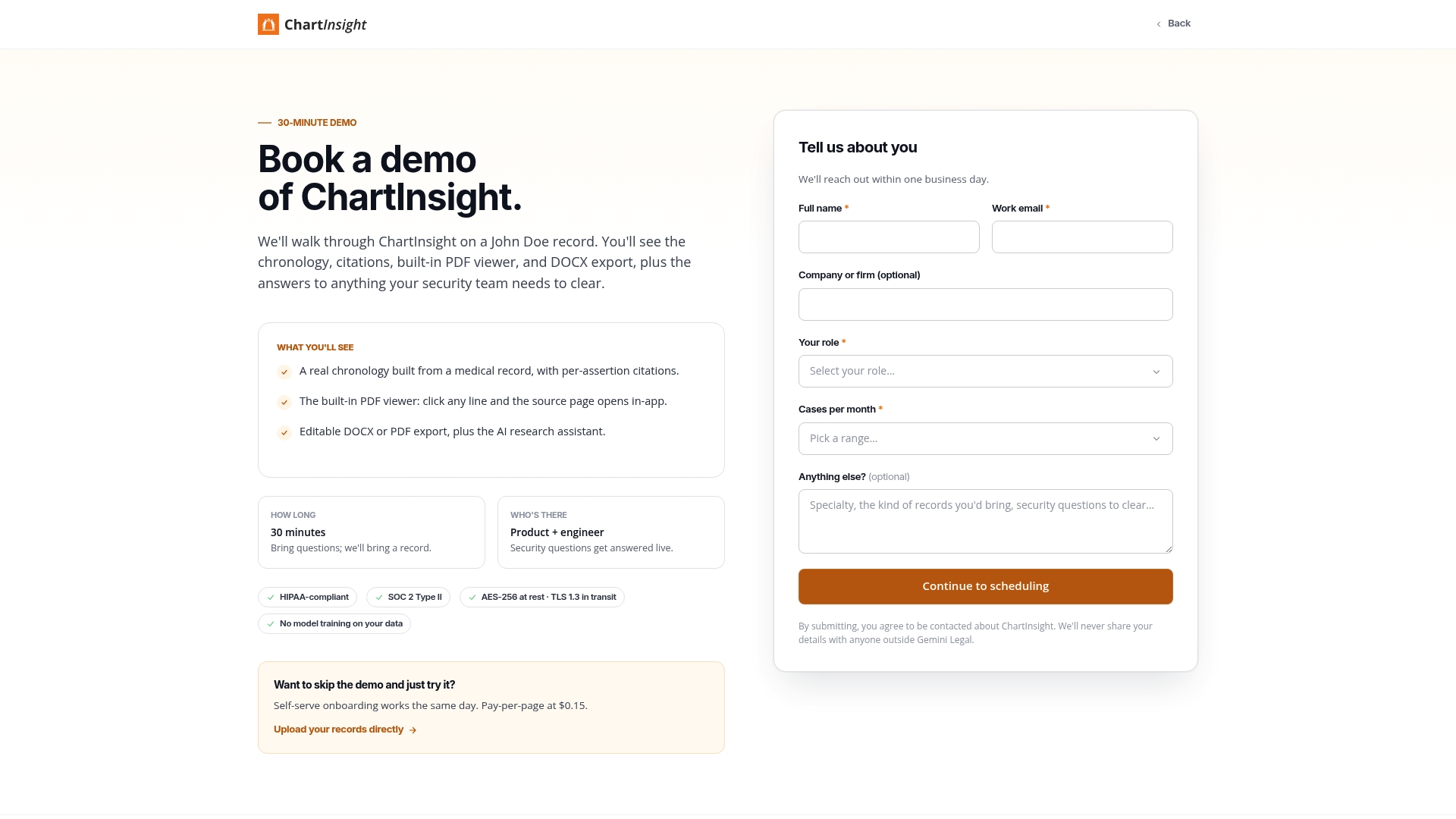
The platform's Templates and Prompt Library keep output consistent whether the case is a workers' comp apportionment dispute or a psychiatric personal-injury claim, and every export, DOCX or PDF, preserves those citations instead of stripping them. Staff roles, document classification, and audit logging of record access and administrative actions give firms a trail from intake through delivery. If you want to see how a custom analysis handles one of your actual case files, book a demo and bring a record you're currently reviewing.
Sources
- DWC FAQs on QMEs for physicians, California Division of Workers' Compensation
- Streamlining the Process of Obtaining and Reviewing Clinical Documentation, WorkersCompensation.com Expert Analysis (opinion column, 2025)
- Medical Records Review: Reduce Costs and Promote Settlements, Amaxx Workers Comp Blog (vendor blog, 2023)
- Qualified Medical Evaluators and the Medical-Legal Process in California Workers' Compensation, RAND (2026)
This article is general information, not a substitute for advice from a qualified doctor. Consult a qualified healthcare professional about your own circumstances before acting on anything here.
FAQ
What Is a Custom Medical Analysis in Simple Terms?
It's a configurable report module inside a record-review platform that pulls specific, page-cited findings, like a timeline or an apportionment note, tailored to what your case actually needs.
How Is a Custom Analysis Different From a Standard Medical Summary?
A standard summary gives you a general narrative, while a custom analysis is built around specific modules and legal questions, each fact linked to the exact source page for verification.
Can a Custom Analysis Replace a QME's Independent Judgment?
No. It organizes and cites the record faster, but the QME or reviewing physician still has to interpret the findings and reach an independent medical conclusion.
How Long Does a Custom Medical Analysis Typically Take?
It depends on record volume, the modules requested, and the depth of the QC pass. Ask the vendor or platform for figures on your own record sizes rather than relying on generic ranges.
Does ChartInsight™ Alter the Original Medical Record?
No. ChartInsight™ does not edit or rewrite the source record; every extracted fact carries a live citation back to the original page.